

Some updates from my cocoon
A new name, a new focus for The Patchwork Principle

Reader,
It’s been a while. There’s a lot happening behind the scenes that I’m excited to share, but I’m giving things more time to incubate these days. I am in my cocoon, impatiently molting. I wanted to reach out from my solitude and share some updates and set an intention for the future of this newsletter project.
A new name!
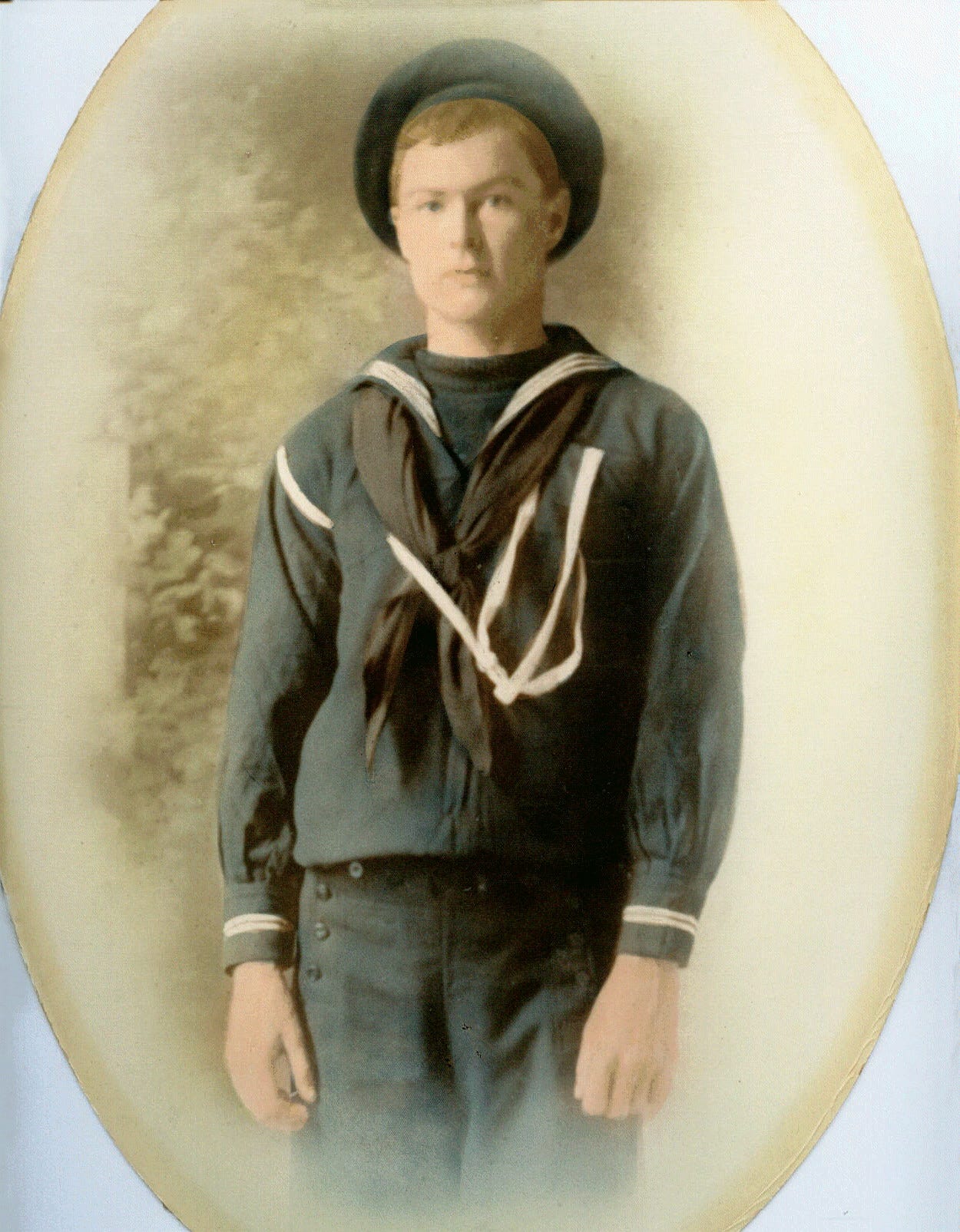
I have been writing under my birth name for a few years now, and it never felt quite right. To name myself just anything didn’t feel right, either. The only one that feels right is Hilary Mathew Davis, the name of my great-great grandfather.
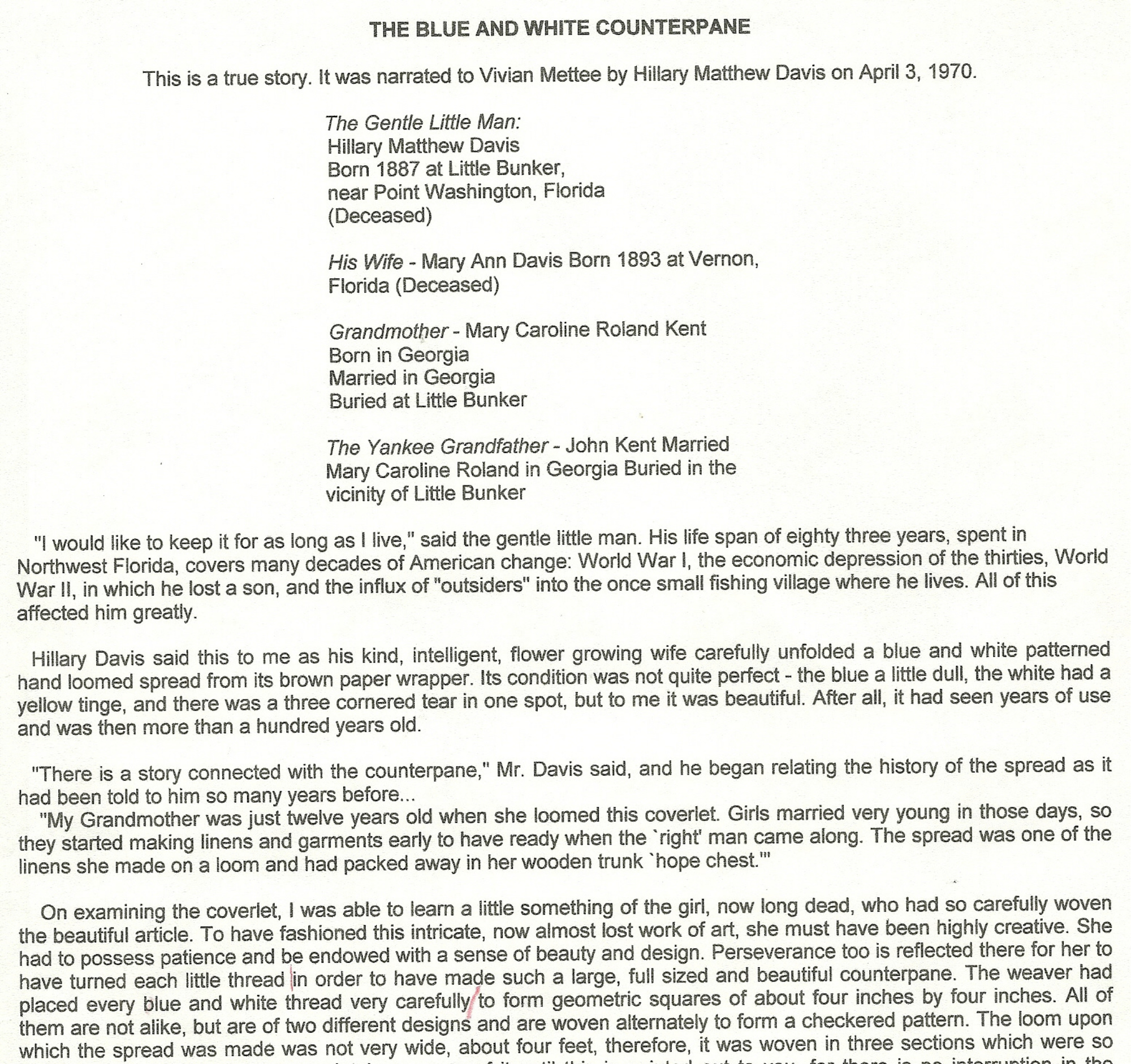
It was my mother’s first choice for me, but she was talked out of it. Here is a snippet of a story narrated by him, so that you can get to know Hilary, here narrating the story of an heirloom in my family, a weaving, which I’ll be sharing more about in the future.
Folk Art
When I return to posting regularly, I want this newsletter to celebrate the folk arts, both contemporary and forgotten. I want to find a way to gather the smaller side of art history, and in a small way, preserve them.
The folk arts are important for the passing down of stories, and, at this point in the development of the human experience, folk artists have a rather difficult and convoluted story to tell. Still I think we must find a way to tell them, as complicated as they may be.
I’ll begin by giving a brief summary of a story in my family, which I intend to research myself later this year.
I will have much to say about a civil war era folk artist in my family lineage, my civil war era grandmother, Mary Caroline Rowland. I’d like you to consider that while this story may seem rather extraordinary, there are likely many American stories just like this one.
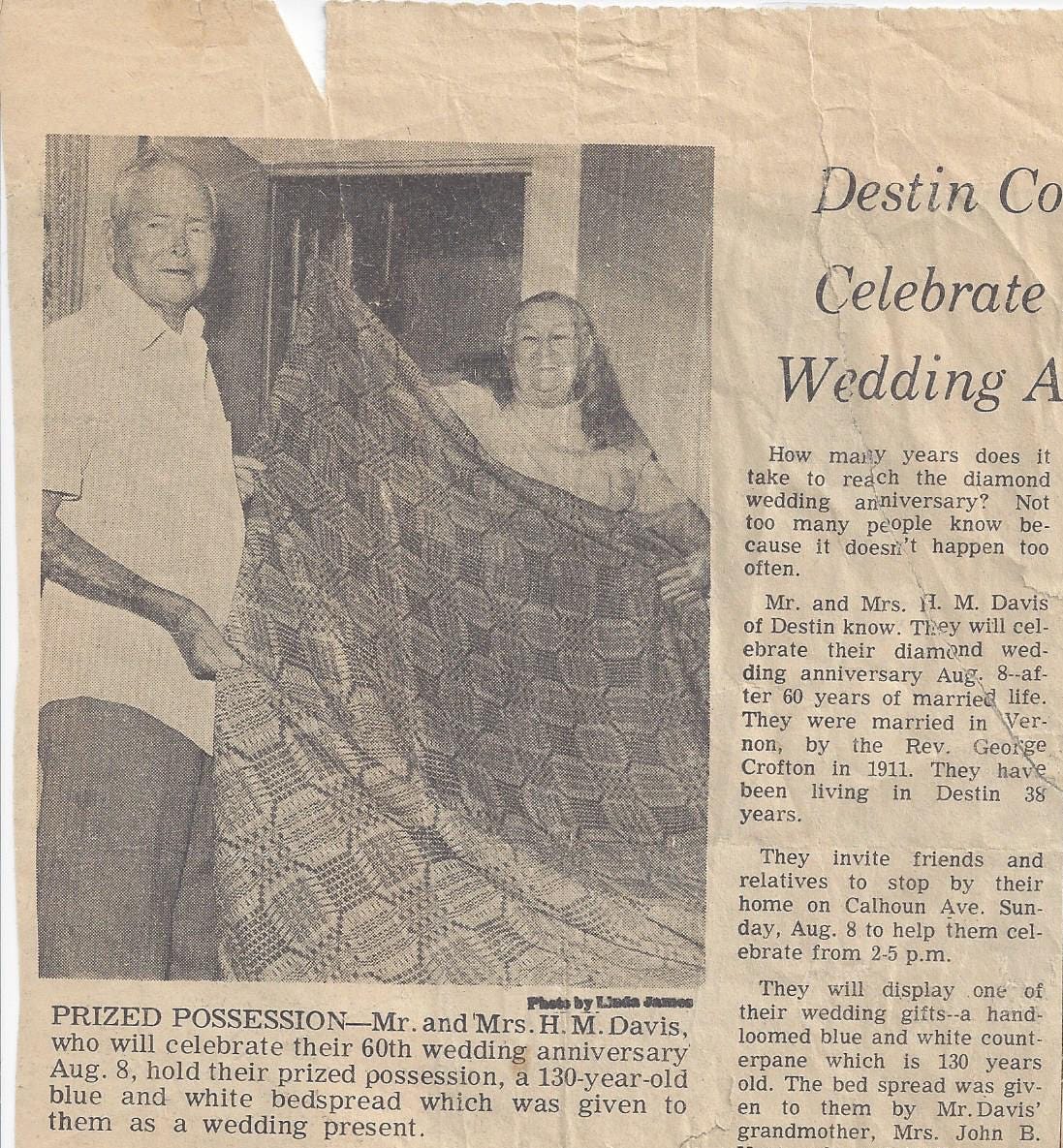
In this newspaper clipping, my grandfather Hilary and his wife Mary Ann hold up a the counterpane, the weaving aforementioned. Sadly, it has taken me thirty years of life to appreciate the great accomplishment and significance of this weaving, woven by my grandmother Mary Caroline Rowland when she was only 12 years old from the spinning of raw wool, to weaving it on her loom.
Also sadly, I have never gotten to see it for myself, and the coverlet is now allegedly rotting under an estranged family member’s bed.
This kind of coverlet was a common practice for young girls of the time (1830s, 40s) in Macon, Georgia. They were meant to attract a suitor, and her craftswoman ship did in fact lead her to my grandfather, “the Yankee,” John B Kent. As a union family in the south, Mary Caroline received much bitterness and rancor from her neighbors while her husband was in service with the union Navy.
Mary Carolines made the decision to leave her beloved farm after her fodder was burned and livestock driven off. According to the the narrative that was passed down, this little coverlet took an arduous journey by oxen-driven wagon through the Florida wilderness for a 6 week journey south to the Gulf Coast of Florida with Mary Caroline and her 6 children, including an infant.
Miraculously, the coverlet survived the burning of a barn, a months journey through swampland, a century of reverence for the past, and into the present day, or at least we certainly hope so. (If that family member happens to read this please consider letting me help you find a museum to conserve it in.) I digress.
All this to say, my family’s counterpane is a small but significant piece of American history. There are many certainly many like it, given the upheaval at the time.
This story is not significant because of one woman’s extraordinary capabilities, but a material literacy and knowledge of the earth that was once rather common.
Who were the folk artists in your family?
Creative Literacy
I want this newsletter to explore creativity as a kind of literacy.
I have formed this idea from observations as an artist and as someone working in adult education. As a person who makes things in public spaces often, I often hear people say in response to my making that they themselves could never be “creative.” As a person employed to lead an adult education program, I have noticed that learning environments improve, and learners feel more optimistic about their learning, whenever there is an opportunity to be creative.
And all of this creativity can happen without making anything at all. Creativity is simply a personal way of reading the world and responding to it, and seeing every day with a new set of eyes, and an openness to the moment. Doesn’t this sound like an important skill for anyone in this day and time to possess?
I descend from a line of people who would have been described as back-woodsy. My grandmother who wove the coverlet demonstrated a sophisticated and embodied capacity for mathematical thinking, and she could not read or sign her name the day that she died. She could not read the written word, but she could certainly read the world.
What higher literacy is there than the literacy of the earth and the knowledge of our pasts?
If any of this struck a chord with you, I’d love to chat. I’d love to collaborate and think in public with others on these topics in the future.
Until next time,
Hilary M. Davis
Love this: "What higher literacy is there than the literacy of the earth and the knowledge of our pasts?"
I was wondering where you'd gone! Grateful that you popped up in my feed again. I love all of this. When I started writing under the second name of 'England' (the oldest maternal second name I can trace in my family line), I actually wanted to change my first name to my Grandmother's - Edie. Actually, her name was Edith but I liked the shortened version. Someone put me off doing so but I wish I hadn't listened. I think when we're delving into our personal folk stories, it's natural to want to step into someone else's shoes, to see the world through their eyes. Plus, it's just fun to play with bringing out a different side of our characters. I'm looking forward to reading more.